 East
 Find


#1 Winter Safety Item for Your Car this Winter – Tires!
Last week we talked about windshield visibility and getting ready for winter. (If you missed it, the last article is below). But when I asked our technicians what was the #1 thing car owners should do to prepare their car for safe winter driving, the answer was overwhelmingly, “TIRES”!
Climatologists are predicting higher than usual snow fall for the front range this year, and it will likely hit before the end of October. I know it is hard to imagine that winter is almost here, given that we had summer on Sunday, but it is on the way!
It makes sense. Even if your brakes are working optimally, your car will not stop quickly (or at all) and you will have difficulty navigating turns if you have poor traction. Only a small “footprint” of your tire actually contacts the road at any one time, so it is important to have adequate, appropriate tread on your tires.
If you have winter snow tires, get them mounted and balanced soon. If you don’t have adequate tread or snow tires, now is the time to get a good all-weather or snow tire for the  season. Our Service Advisors can help you determine what kind of tire is right for the type of driving you do (city vs. mountain passes) and the type of vehicle you own.
Even road performance with all-wheel drive vehicles will improve with better traction. Winter tires are designed specifically to handle snow and icy road conditions in two different ways:
- First, winter tires are constructed of a rubber compound that will remain soft even in very cold temperatures, thus bending and flexing and adhering to the road, resulting in better contact and traction.
- Second, the treads are designed to have more edges, called “sipes,” that grip the snow and ice more effectively. Treads are deeper and channel snow and slush away from the tread to further help with traction on the road.
Tests conducted on stopping distances for winter tires compared to all-season tires and summer tires showed that it took significantly longer to stop: 16-18% longer for all-season and more than 120% for summer tires (Edmonds.com). So, if stopping is important to you in wintery conditions, winter tires would be a good investment.
Of course, if the tread depth on any tire is worn below 2/32”, those tires will perform
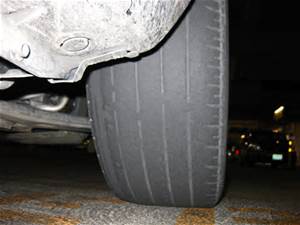 |
| Poor (No) Tire Tread |
more like a sled and you will not obtain grip on any road the way you expect or desire. Air pressure should also be checked more frequently during the winter, as changes in temperatures can result in loss of air pressure and less traction. We are always happy to do a complimentary tire tread or air pressure check at either shop.
If you are driving in the mountains or on long road trips during the winter, be prepared for even more severe weather. Be prepared: carry a set of chains and a bag of sand in your vehicle for severe weather and ice.
Since only a fist size spot on your tire actually contacts the road at any given time, it is even more important to have the right tire tread that will hug the road when stopping, accelerating and navigating turns. Get ready for winter weather now, with the correct tires for your car.
Tune in next week when we will give suggestions about coolant/anti-freeze and making sure your car is prepared for colder temperatures.
Wishing you safe driving this fall and winter!


